Strong Bones After Menopause: My DexaFit Results at 56
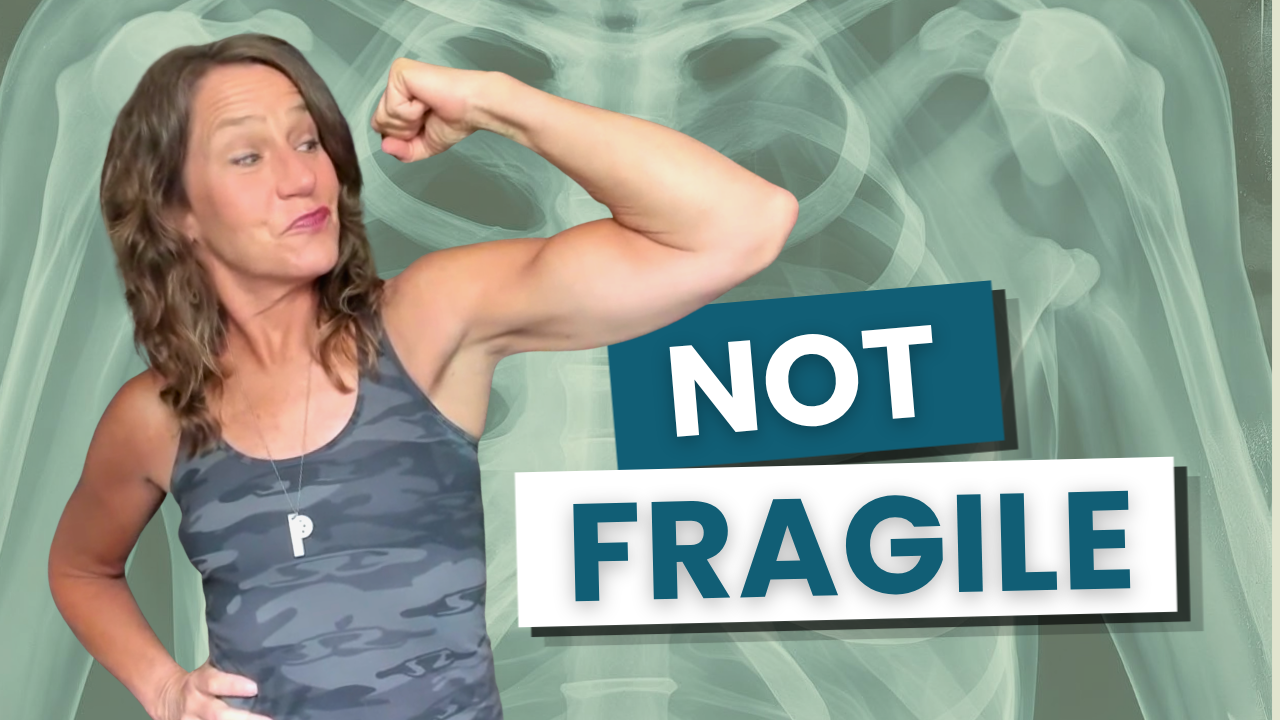
Can short strength workouts really protect your bone density after menopause? Last year at 56, almost seven years past surgical menopause, I got my first DexaFit scan to find out, and the results surprised me.
In 2024, I was recovering from a car accident. We were mid-move, and my strength training fell off completely. By Christmas, the scale was at an all-time high, and I did not recognize myself.
This is the full story of what I changed in 2025 and what my bone scan showed at the end of it.
What happens to your bones after menopause
Estrogen does more than run your cycle. It helps manage the constant remodeling your skeleton goes through, the slow trade of old bone for new. When estrogen drops in menopause, that trade tips out of balance, breakdown starts to outrun formation, and density can fall faster than at any other time in your life. Surgical menopause, in my case a radical hysterectomy just before I turned 50, put me on an even steeper path than most women after 50 ever face.
The numbers get your attention.
A woman can lose up to 20 percent of her bone density in the first five to seven years after menopause, often without a single symptom. About 1 in 2 women over 50 will break a bone from osteoporosis, and roughly 1 in 4 older adults dies within a year of breaking a hip. A scan reports where you stand as a T-score. Minus one or above is normal, minus one to minus two point five is osteopenia, and minus two point five or lower is osteoporosis.
Most women have no idea where they land until something breaks, which is exactly the problem.
Can you build bone density after menopause?
The encouraging part is real. Bone is living tissue that responds to being challenged. When you load it through resistance training and weight-bearing movement, it answers by laying down more tissue and getting denser. Studies on women past menopause who followed a structured strength program have shown small but real gains over a matter of months, while women who stayed sedentary held flat or slipped backward.
Small and real is the honest promise. You will not reverse years of loss in a few weeks, and no workout replaces a conversation with your own provider once you have been diagnosed. What movement can do is slow the loss, hold your ground, and in many cases add a little back, while lowering your odds of the fracture that changes everything.
The two kinds of movement that load your bones
Two signals tell a bone to build.
The first is heavy work. Lifting something challenging enough that the last couple of reps feel hard sends a clear message down through the muscle and into the bone. This is why I keep women in short strength sessions with real load instead of endless light reps.
The second is impact, the gentle jolt of your feet meeting the ground. Walking counts, and adding a few faster stretches, or a small hop where your body allows it, counts for more.
One caution worth saying plainly. If you have already been told you have low bone density, get cleared by your provider before you add impact or heavy loading, and build up slowly. Steady progress beats intensity every time here.
What I actually did
None of it was heroic. I got morning light most days, put protein on every plate, took D3 with K2, wore a weighted vest for easy daily load, and did 10-ish minute demo-style strength workouts that fit a busy, tired midlife life.
The reasons are simple.
Protein is the framework your bones are built on, and it is the piece most midlife women miss. Vitamin D helps you absorb the calcium you eat, and K2 helps that calcium settle into bone rather than wander where it should not. A cabinet full of pills was never the goal. Just a few basics, done consistently, do the real work.
My DexaFit results at 56
So what did the scan actually say? After a year of small, repeatable things, my bone density came back with a Z-score of 2.1 compared to women my age, and a T-score of 1.2 compared to healthy young women, both in the excellent range. I am not sharing that to brag. Those small things, done for a long time, added up in a place I could finally see on paper.
One honest note, because it matters. A whole-body scan like this is for context, not a medical diagnosis. Osteoporosis is diagnosed at the hip and spine, so get your own scan, know your numbers, and work with your provider.
Where to start this week
You do not need the whole plan today. Start with one doable week.
- Strength train two or three times, or about 60 minutes a week, using a weight that makes the last two reps feel hard.
- Walk most days, and slot three or four thirty-second faster stretches into one of those walks.
- Put real protein on your breakfast plate before anything else.
- Book a baseline DEXA or DexaFit scan so you know your true starting point instead of guessing.
Chapters: 00:00 Understanding Postmenopausal Bone Loss 04:12 Rapid bone loss and exercise decision 06:39 Protein and Strength Training Plan 11:15 Midlife bone health discussion
Grab my free Midlife Bone Care Guide, the 10 simple steps I actually did: https://www.camoyler.com/boneguide
Start with my demo-style Menopause Mini Strength Program: https://www.camoyler.com/offers/dNzq2xmR/checkout
The D3 with K2 I use: https://camallen.nutridyn.com/d3-5000
The weighted vest I use: https://amzn.to/4qf9gRO
Some links above are affiliate links. If you buy through them I may earn a small commission at no extra cost to you.
Subscribe for a new midlife strength and menopause episode every week.
Come say hi on Instagram: https://www.instagram.com/heymomma_cam/
Click below to listen now, and let's make movement work for you.
#Menopause #BoneHealth #StrengthTrainingOver50 #MidlifeMethod #Over50
