Protein After 50: How Much You Need and How to Get It in Menopause
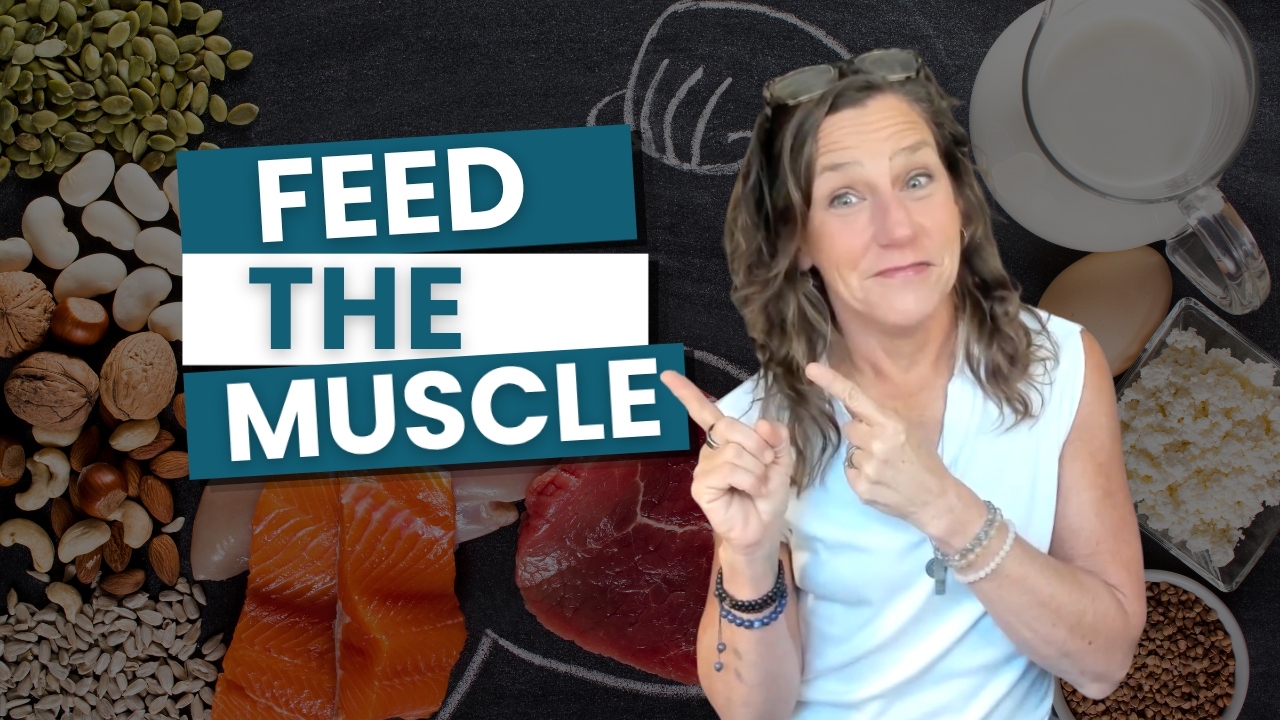
Protein After 50: How Much You Need to Build Muscle in Menopause
By Cam Allen | The Midlife Method
Protein is the one thing almost every midlife woman is under-eating, and it is the piece that decides whether all your hard work actually shows up as muscle. If you feel softer and more tired after 50, and the workouts that used to work have stopped working, there is a good chance protein is a bigger part of the story than anyone has told you.
I want to walk you through why protein matters so much more in menopause, how much you actually need, and the simple ways I get enough every day without a food scale or complicated math. I lived a lot of this the hard way, so let me save you some time.
My protein story: from vegetarian to midlife muscle
For more than a decade, from my 30s into my 40s, I was a vegetarian. It was not for health reasons. It was ethical. I thought about the animals, that they were mothers taking care of their young, and I did not want any part of it.
Then during my CrossFit years, my body started sending signals I could not ignore. I began craving salmon. So I listened, and I became a pescatarian for several more years.
About six months after my hysterectomy, when I was around 50, something shifted again. I started craving filet. Red meat, of all things, after all those years. Instead of fighting it, I leaned into the next right thing for my body.
Here is where I will be honest with you, because you deserve honest. I do not believe I could hold onto my midlife muscle in menopause without animal protein. I still care deeply about where my meat comes from. I look for grass-fed and grass-finished when I can, and wild caught for fish. But I stopped fighting myself, and I watched my body respond when I added it back in.
Could a woman build muscle on plant protein alone? Maybe, with a lot of planning and the right supplements. It is just harder, and it is less forgiving. Animal protein is a complete protein, which means it has all nine essential amino acids, the ones your body cannot make on its own. That is exactly what your muscle is looking for, and in menopause your body needs more convincing to build muscle, not less.
Why protein matters more after 50
Think of protein as the renovation crew for your body. It is made of amino acids, the building blocks that build, repair, and maintain everything, especially your muscle.
When you lift weights, you create tiny micro tears in the muscle. Protein is what comes in, patches them up, and makes the muscle stronger. So hear this. The lifting is the workout. The protein is what lets your body keep the results. One does not work without the other.
There are a few more reasons protein becomes your best friend in this season.
It boosts your metabolism. This is called the thermic effect of food. Your body uses 20 to 30 percent of the calories from protein just to digest it. So if you eat 100 calories of steak, 20 to 30 of those calories get burned breaking it down. You actually burn more digesting protein than you do in the exercise itself.
It steadies your blood sugar. Protein smooths out the energy spikes and crashes. A carb-heavy snack might hold you for an hour. A protein-rich one gives you two to three hours of steady energy. If you do not prioritize it, you tend to overeat everything else, because you never feel truly satisfied.
It helps you hold onto muscle when your body wants to let it go. In one study that followed women for five years, the ones eating the most protein had about 5 to 6 percent more muscle than the ones eating the least. Same five years, and the protein made a visible difference in how much muscle they were walking around in.
How much protein do you need in menopause?
As we move through menopause, our bodies need more protein than before just to hold onto the muscle we already have. This is also where protein can help if you are dealing with insulin resistance.
You do not need to weigh every piece of chicken to get this right. Here are the simple ways I check.
The palm method. For most meals, aim for a portion of protein about the size and thickness of your palm. No app or scale required. Start there.
Become a label reader. At the store, turn the package over and glance at the protein on your yogurt, cottage cheese, and bread. You will probably be surprised. Keep a running list in the notes app on your phone for a day or two to build a baseline.
Use a tracking app if you like data. My favorite is Cronometer. I call it the Coach's app because the food entries are vetted, and the micronutrient detail is amazing. It is free and easy to use.
Take a picture of your plate. I do this with some of my one-on-one clients. We keep a shared photo album, and they simply snap a picture of each meal. It becomes a food diary made of pictures, and it is amazing how things change when you can actually see where the protein is, or is not.
Run the awesome-awful test. An hour after you eat, how do you feel? Awesome, steady, and full? Or awful, foggy, and already hunting for chips? If you are hungry an hour after breakfast, you probably came up low on protein and fat.
And here is a gentler check-in. A lot of us believe we eat pretty healthy and surely get enough protein. So let me ask you. Is that really true? It is not a judgment. It is just information, feedback for your body.
My favorite high-protein meals and hacks
The goal is not to suddenly eat 150 grams of protein tomorrow. The goal is to start where you are and add a little more each time you eat. Win your first meal, and the whole day gets easier. Aim for 20 to 30 grams at breakfast.
The invisible upgrade. I start with collagen in my coffee. It is tasteless and adds about 18 grams before I have even eaten. One note, collagen has 8 of the 9 essential amino acids, so it is close but not complete. Do not let it be your only protein of the day.
The power bowl. Greek yogurt as the base gives you anywhere from 18 to 30 grams depending on your bowl. I add berries for fiber, then hemp hearts, chia, walnuts, or almonds for a little extra protein and healthy fat. Sometimes I stir in a scoop of protein powder. I have been loving the peanut butter one from Equip Foods.
The savory start. Two whole eggs with an almond flour wrap, Ezekiel bread, or sourdough. That is about 12 to 15 grams, so lean on it alongside other sources. And do not forget leftovers. A little salmon or a piece of steak from last night makes a perfect savory breakfast.
The no-cook lunch. A can of tuna is your best friend. I love Safe Catch because they test every can for mercury. Mix it with guacamole and scoop it up on romaine or toasted sourdough. Eat the whole can and you are looking at over 30 grams.
The bone broth latte. When that 3 p.m. crash hits, instead of a carby snack, heat up a mug of bone broth. It is savory, it curbs cravings, and it will not ruin your dinner.
Three simple habits to get more protein
Eat your protein first. Take a few bites of your protein before you dive into the potatoes or bread. This helps blunt the glucose response to your meal and keeps your blood sugar steadier, which helps with both energy and belly fat.
Plan your protein first. When you build a plate, make the protein the star. Put it down first, then add your veggies and healthy carbs around it.
Think diversity. Plants have protein too. Hemp hearts, flax, quinoa, chickpeas, and all the beans add up, and they bring fiber and micronutrients along with them. If you eat meat, choose a sustainable source. I use Butcher Box at our house because it is simple.
This is really about worth
Underneath all of this is something bigger. You are worth feeding well. Not the leftovers of the leftovers after you have taken care of everyone else, but food that actually builds you. Feeding yourself on purpose is not selfish. It is you telling your body, I am not giving up on you.
Menopause is not the end of your strong years. It is an invitation to learn your own body and love her enough to take care of her now. Lifting builds the muscle. Protein feeds and repairs it. And that muscle is what carries you through the whole second half of your life.
Frequently asked questions
How much protein do women need after 50? More than they did when they were younger, simply to hold onto existing muscle. The palm method is an easy starting target: a palm-sized portion of protein at each meal, aiming for roughly 20 to 30 grams per meal and building up from where you are now.
Can you build muscle on plant protein alone? It is possible with careful planning and the right supplements, but it is harder and less forgiving, because most plant sources are not complete proteins. Animal protein delivers all nine essential amino acids in the form your muscle is looking for.
Is collagen a complete protein? No. Collagen has 8 of the 9 essential amino acids, so it is a great addition, especially in a morning coffee, but it should not be your only protein source for the day.
When should I eat protein for the best results? Start with your first meal of the day, and eat your protein first within each meal. Front-loading protein helps steady your blood sugar and keeps you fuller longer.
What are easy high-protein breakfasts for menopause? Collagen in your coffee, a Greek yogurt power bowl with seeds and berries, two eggs with Ezekiel bread, or last night's leftovers all work well and take almost no effort.
Chapters:
00:00 Midlife fitness and diet changes
05:59 The importance of protein in diet
09:40 Importance of Breakfast Protein
12:45 Eating order for blood sugar
13:57 Focusing on protein and health
Resources and things I mentioned:
Cronometer (free tracking app I call the Coach's app)
Safe Catch tuna (mercury tested)
Butcher Box (my sustainable meat source): https://www.butcherbox.com/discount/EGTB-2574-CMOZ?referral
Equip peanut butter protein powder: https://www.equipfoods.com/HEYCAM
Foundational 5 supplements (NutriDyn, 20% off): https://camallen.nutridyn.com
Some links are affiliate links, which means I may earn a small commission at no extra cost to you.
Watch next:
Last week's blood sugar episode: https://youtu.be/1YjSwxlFNDI
Come say hi on Instagram: @heymomma_cam
Free Midlife Method app to get started:
Apple: https://apps.apple.com/us/app/midlife-method-with-cam-allen/id6755252970
Google: https://play.google.com/store/apps/details?id=com.kj70460.app
If this helped, subscribe so the next one finds you.
Click below to listen now, and let's make movement work for you.
