How to Lose Belly Fat in Menopause Without Cardio
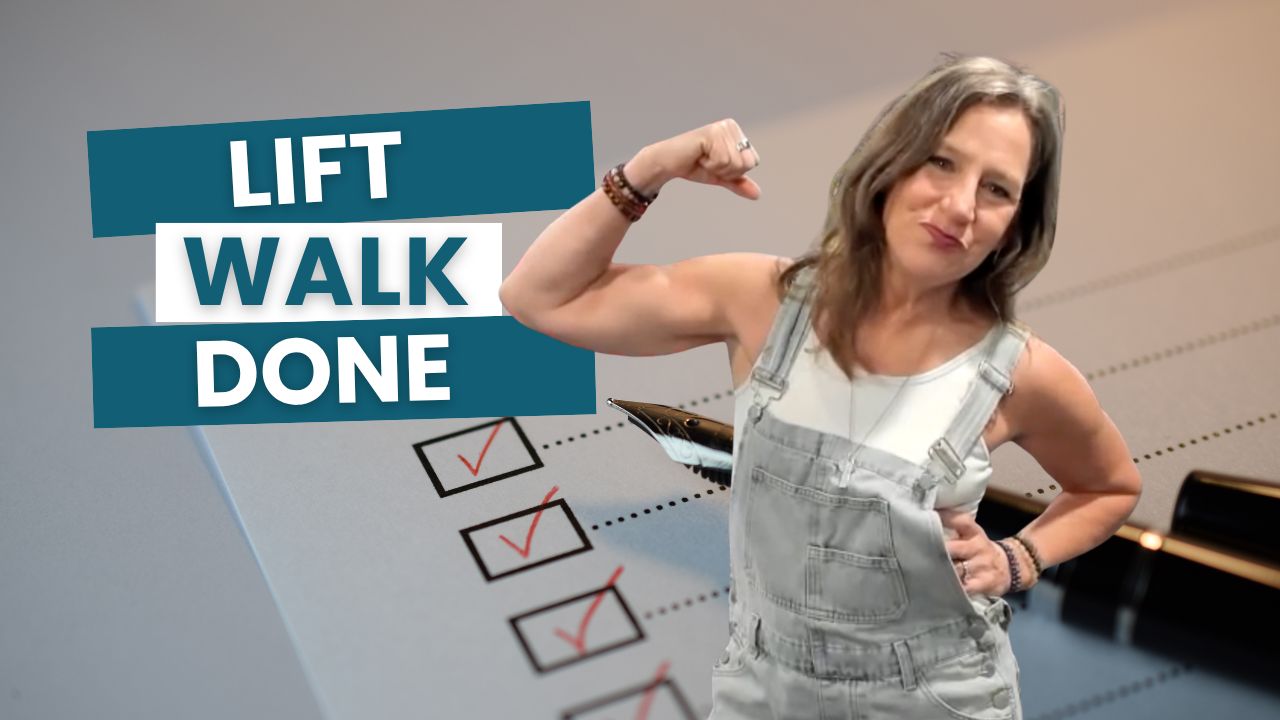
How to Lose Belly Fat in Menopause Without Cardio
By Cam Allen, functional health coach | Midlife Method with Cam Allen®
The quick answer
To lose belly fat in menopause, piling on more cardio tends to backfire. In an 18-month study of adults in their 60s, the group that added cardio to a diet lost about twice as much lean mass as the group that lifted weights, and more than the group that only dieted. Long, hard cardio also adds stress, and the stress hormone cortisol tends to store fat around your middle. What works better is much easier. Lift, walk, done: lift something heavy for you about 60-ish minutes a week, walk after dinner, and save all-out cardio for seasons when life feels handled.
You added another day of cardio. Then you made the sessions longer. Treadmill, bike, walking pad, chasing that burn because diet culture promised more cardio would finally melt the midlife midsection. And it held on. Maybe it even feels softer than before.
Then the old voice creeps in. Maybe you need more discipline. Maybe you need to try harder.
That voice is lying to you. You did everything you were told. You were handed the wrong plan, and in menopause that plan can work against you. This post is part of my Menopause Myths series, where we take one thing you've been told about your midlife body, hold it up to the light, and ask, is that even true?
Why the cardio myth feels so true
Cardio does burn calories while you're doing it. You can watch the numbers climb on the treadmill or on your watch. It's simple and it's satisfying, so more cardio feels like it should mean more fat gone.
Your midsection in midlife runs on something else. We are not calorie calculators. Menopause weight loss is a muscle story and a stress story, and more cardio can make both of them harder.
What an 18-month study found about cardio and muscle
Any time you lose weight, your body gives up two things together: fat and muscle. As a rule of thumb, about a quarter of what you lose on a diet alone tends to be muscle. That's the baseline for everybody.
Researchers at Wake Forest University followed 249 adults with an average age of 67, most of them women, for a year and a half. Everyone followed a calorie-cut diet, and they were split into three groups:
- Diet only
- Diet plus cardio (a structured walking program)
- Diet plus lifting weights
Here's roughly how much lean mass, which is mostly muscle, each group lost:
|
Group |
Lean mass lost |
In pounds |
|
Diet plus cardio |
about 1.6 kg |
about 3.5 lb |
|
Diet only |
about 1.0 kg |
about 2.2 lb |
|
Diet plus lifting weights |
about 0.8 kg |
about 1.8 lb |
The cardio group lost about twice as much as the lifting group, and more than the people who did no extra exercise at all. Adding cardio on top of eating less left their muscle unprotected. Lifting protected it.
Source: Beavers KM et al. Effect of Exercise Type during Intentional Weight Loss on Body Composition in Older Adults with Obesity. Obesity, 2017.
The second problem: cardio, cortisol, and your middle
Losing muscle stings. Cortisol, your stress hormone, adds a second layer.
Long, hard, grinding cardio is a stressor. Cortisol tells your body to store fat right around your middle. So when you pile more and more cardio onto a midlife body that's already stretched thin, you can raise the exact hormone that parks fat where you least want it. For a midlife body that's already stretched thin, more cardio and more cortisol can turn into a loop.
I go deeper on this in Menopause Belly Fat, Part 1: Why More Exercise Isn't Working and Part 2: 3 Hormones Storing Fat in Your Middle.
A marathon story
A few years ago a friend from the CrossFit world trained for a marathon. Lots of muscle, lots of energy. She took about a year off lifting weights to train, and she finished all 26.2 miles.
When I saw her at the finish line, she looked inflamed. She looked like a different person than the strong woman I knew before training. All that fitness, and she ended up with less muscle. That's what happens when you lean on the cardio lever too hard.
Why muscle matters so much after 50
Muscle is your engine. It stores and uses your blood sugar. It keeps your metabolism running while you're sitting on the couch. And it's the firm, strong shape under the softness you're hoping to lose.
So when you burn off muscle chasing a smaller midsection, you burn away the very thing that would give you the midsection you want. If blood sugar is part of your story, read [Lower Blood Sugar in Menopause Means Less Belly Fat].
The easier plan: lift, walk, done
This plan asks much less of you than what you've been doing.
1. Let strength come first
Lift something heavy for you for about 60-ish minutes a week. That's a week, spread across a few sessions. An hour of real lifting tells your body to keep this muscle, build this muscle, and hold on to these bones. Pair it with enough protein to feed that muscle. My post [In Menopause, How Much Protein Do You Need] walks you through it.
2. Let walking be your cardio
A walk after dinner is one of the kindest things you can do for your midlife body. Walking after you eat helps lower the blood sugar rise from your meal. Gentle walking while you're well fed is a different thing from grinding out cardio while you're under-eating. Keep your walks forever. And if you can get outside in the evening light, it can help your body wind down toward sleep.
3. Save all-out cardio for calmer seasons
Lungs-on-fire cardio has a time and a place. If you're stretched thin with work, family, and everything else on your plate, hard cardio is one more stressor on top. Save it for the seasons when life feels handled.
A question to try on
When the old thought shows up, "I just need to do more," pause and ask yourself, is that even true? If more cardio was the answer, after everything you've put in, it would have worked by now. Then ask the next question. Am I ready to try something different?
Give yourself permission to do less of what's wearing you down and more of what works. Build the muscle, keep your walks, and watch your midsection follow. In midlife we're building a strong body we actually get to live in.
Frequently asked questions
Can you lose belly fat in menopause without cardio?
Yes. Lifting something heavy for you a few times a week, walking after meals, eating enough protein, and protecting your sleep and stress all help your body let go of belly fat. Gentle walking still counts as movement. What you can let go of is the long, hard cardio grind.
Is cardio good for weight loss in menopause?
Some cardio is fine, and gentle walking is a great habit. The trouble comes when cardio is the main plan, especially paired with eating less. In an 18-month study, adding cardio to a diet led to more muscle loss than dieting alone, while adding weight training protected the most muscle.
How much strength training do women over 50 need?
About 60-ish minutes a week of lifting something heavy for you is a strong, doable target. Research suggests much of the benefit of muscle-strengthening work shows up in the range of about 30 to 60 minutes a week.
Does walking count as cardio in menopause?
Yes. Walking, especially after meals, helps with blood sugar and is easy on your body. Let it be your everyday cardio and pair it with lifting.
Why is belly fat harder to lose in menopause?
Hormones shift where your body stores fat. Lower estrogen, higher stress, and changes in insulin all tend to steer fat toward your middle. That's why muscle, sleep, steady blood sugar, and lower stress matter more than extra calorie burn.
Can too much cardio cause muscle loss?
It can, especially when you're also cutting calories and skipping lifting. Long, hard cardio can also raise cortisol, which breaks down muscle and favors fat storage around the middle.
Keep reading
More from the Menopause Myths series
Go deeper
- Menopause Belly Fat, Part 1: Why More Exercise Isn't Working
- Menopause Belly Fat, Part 2: 3 Hormones Storing Fat in Your Middle
- Menopause Belly Fat, Part 3: Gut Health
- [In Menopause, How Much Protein Do You Need]
I'm a functional health coach. Please take anything medical to your doctor.
